Bushwick
Loft Space.
Tell us once what you're after — including the floors that never hit the listing sites. A person reads it. That's the whole thing.
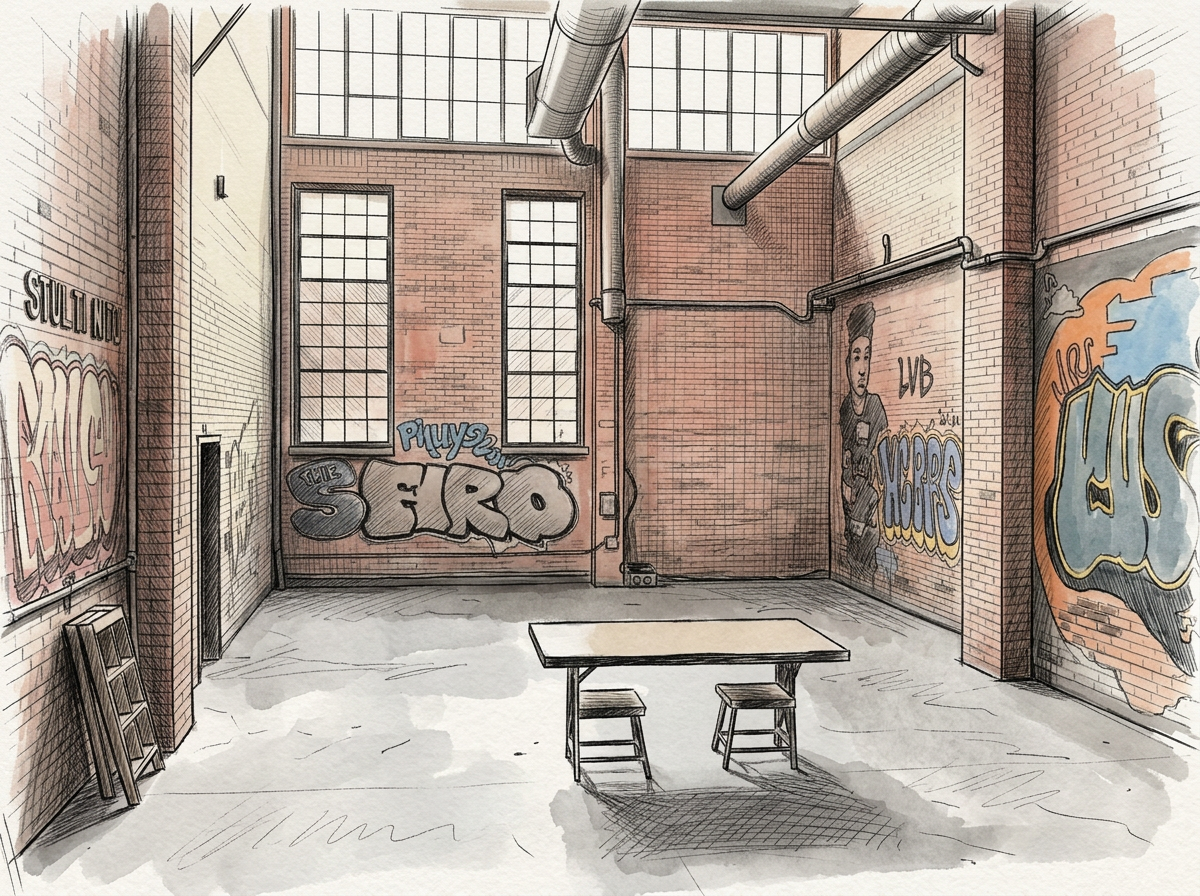
Seven questions.
That's the whole thing.
Under two minutes. No account, no login. A person reads every one.
How much room do you need?
Before you tour, hear what to look for.
Structure, submarkets, and the questions worth asking on a walkthrough — including the ones that decide whether a floor works for what you make.
Bushwick industrial lofts: from breweries to warehouses
How to read a Bushwick loft building on a tour — 6 minutes.
AI-narrated
Read the transcript
Host 1You step off the sidewalk in Bushwick today, you walk into a commercial office loft, and immediately you're hit with the physical reality of the space.
Host 2Yeah — the exposed brick, the uneven floors, those massive timber beams.
Host 1So we have this stack of real estate notes and architectural surveys here, and our mission for this deep dive is to decode exactly what you're looking at when you take one of these tours. Reading these buildings is honestly like reading tree rings.
Host 2It really is. The physical structure tells you exactly what kind of work it was originally built to handle. Was this built for people sitting at benches, or for heavy machines and massive pallets?
Host 1Exactly. The thicker that structural ring, so to speak, the heavier the original industry. You can't just look at it as empty square footage. To understand what you can physically do in a space today, you have to understand the infrastructure left behind by the 1880s German brewers and knitting mills.
Host 2So let's break down the three main building types. First: thick masonry walls, small deep-set windows, ceiling heights that change completely from floor to floor — and those vaulted lagering cellars still sitting under the street.
Host 1That means you're looking at 1870s to 1900s German brewery architecture. They built those like fortresses because of the sheer weight of the liquid, plus they needed the insulation. German brewers came for the clean Ridgewood aquifer water and the rail lines. By the 1880s you had something like fourteen breweries in a fourteen-block stretch.
Host 2Fourteen in fourteen blocks. It was the beer capital of the Northeast. But as industry evolves between 1890 and 1930, you start seeing the mill buildings — timber or early steel framing, three to six stories, much larger windows on two exposures.
Host 1Because the knitting mills and foundries filling in around them needed natural light for workers at benches — not dark, heavy masonry to keep beer cold.
Host 2Exactly. And then from the 1940s through the '70s you get the industrial warehouses: concrete and steel, wide bays, drive-in doors, high floor loads, sometimes sawtooth skylights.
Host 1So what stopped that progression? 1976 to '77. Within months of each other, Schaefer and Rheingold both closed — ending about 120 years of brewing. And the buildings just sat.
Host 2That exact sequence is why the stock remains low-rise brick built for production. It locked it in. It's why a small shop can still take a whole floor here today.
Host 1That original building type essentially dictated who moved in later, which carved Bushwick into three distinct submarkets. There's the Morgan corridor — Morgan, Jefferson, Bogart, Troutman — mill buildings by the two L stops, full of studios and galleries. That's where you see the most highly demised small spaces.
Host 2And the Myrtle–Broadway spine: older brick with the J, M and Z overhead. Mixed with housing and ground-floor retail, so the strictest neighbors on noise.
Host 1When people think of Bushwick they picture a gritty, anything-goes industrial playground where you can roll up and start welding. Is that a myth?
Host 2If you try that on Myrtle–Broadway you will not last a week. If your operation requires heavy production, you only want to look in the Evergreen industrial corridor — Johnson, Scott, Porter, Randolph, inside the East Williamsburg Industrial Business Zone. That's where heavy use is actually welcome, not just tolerated.
Host 1Because that's where the infrastructure is: loading docks, drive-in doors, real floor loads of 150-plus pounds per square foot, and three-phase power so you don't blow the block's grid the second you turn on heavy equipment.
Host 2Which brings us to the actual tour. Let's talk freight. Does the building run one small original freight elevator for the whole stack? In a building full of artists constantly moving materials, that queue is real. Ask the capacity in pounds, whether the car opens into your space or a shared vestibule, and who's allowed to operate it.
Host 1You also have to look at electrical and egress. Original steam setups or undersized power means you need to know who pays for the upgrades. And in mill buildings, single stairwells severely constrain your legal headcount.
Host 2But the ultimate dealbreaker is the certificate of occupancy. People assume that because Bushwick has a huge nightlife scene, opening an event space is straightforward. If you sign a lease for a public venue only to find the city classifies your building for warehousing only, you're instantly sunk. Read it before signing any letter of intent.
Host 1And because families and long-hold owners control this market, the best spaces operate almost entirely on word of mouth. You won't find them on the listing sites.
Host 2If you're actually looking, there's a short seven-question form on this page. Describe your operational needs and a real person reads it, to match you with unlisted loft floors that fit those specific mechanical requirements.
Host 1Thinking back to those architectural tree rings — if these heavy-duty 19th-century floors survived the collapse of the original German breweries, what entirely new industries will these same brick walls be housing fifty years from now?
Flushing to Conway, Broadway to Cypress — brewery blocks, knitting mills and the industrial corridor that never stopped working.
Three lines, and they go different places.
Better served than people expect, and better than most of the loft districts north of here. The variable is how far into the industrial blocks your building sits.
- Morgan Av
- Jefferson St
- DeKalb Av
- Myrtle–Wyckoff Avs
Morgan Av and Jefferson St put you at Union Square without a transfer — the reason the studio blocks cluster where they do.
- Myrtle–Wyckoff Avs
- Knickerbocker Av
- Central Av
- Seneca Av
Runs up Sixth Avenue through Midtown. Chronically underrated, and it means an L shutdown is not a catastrophe here.
- Gates Av
- Halsey St
- Kosciuszko St
- Chauncey St
The elevated along Broadway, into Lower Manhattan over the Williamsburg Bridge.
- Flushing Av
- Myrtle Av
- Knickerbocker Av
- Metropolitan Av
The practical link into the Industrial Business Zone blocks, where the walk from a train is longest.
Myrtle–Wyckoff is the transfer that makes Bushwick work — the L and the M in one station, which is why the blocks around it lease faster than the ones a few streets east.
A brewery town that never stopped making things.
1661 → today
Boswijck — town in the woods
Peter Stuyvesant charters Boswijck as one of the six original Dutch towns of Brooklyn. It stays farmland for nearly two centuries, crossed by two colonial roads that are still here: Flushing Avenue and Broadway.
The Germans arrive
Immigrants from the German states settle along Bushwick and Myrtle Avenues, bringing both labor and trade skill. Peter Cooper builds his first glue factory here — the beginning of Bushwick as a place that makes things.
Brewer's Row
Drawn by clean water from the Ridgewood aquifer and by the rail lines, German brewers build until as many as fourteen breweries are running inside a fourteen-block stretch. Bushwick becomes the beer capital of the Northeast, and brick-vaulted lagering cellars go in under the streets — a lot of them still down there.
The Ulmer Brewery
William Ulmer builds his complex at Beaver and Belvidere in German round-arch style, mostly to Theobald Engelhardt's designs — office, brew house, engine house, stable. In 2010 it becomes the first brewery in the city to be landmarked.
Mills follow the brewers
Knitting mills, garment shops, foundries and chemical works fill in around the breweries, hiring the same immigrant workforce. The brick loft buildings from these decades are the studio and office stock you tour today.
The last two close
Schaefer and Rheingold shut within months of each other, ending some 120 years of brewing. The blackout the following summer and the looting along Broadway accelerate a decline that takes two decades to bottom out.
Artists cross Flushing Ave
Priced out of Williamsburg, painters, fabricators and musicians take the cheap mill floors around Morgan and Jefferson. In 2012 the Bushwick Collective starts putting murals up on Troutman Street and the neighborhood's second reputation begins.
Studios, stages, and shops that still make things
More working artist studios than anywhere else in the city, a fabrication base along the industrial edge it shares with East Williamsburg, venues like House of Yes and Elsewhere, and rents that still let a small shop take a whole floor. The least expensive real loft space in north Brooklyn.
Who you'd be sharing the block with.
- The Bushwick Collective murals (Troutman St)
- Open-studio galleries on Wilson and Troutman
- Painting and sculpture studios off Morgan
- Ceramics studios near Johnson Ave
- House of Yes (Wyckoff Ave)
- Elsewhere (Johnson Ave)
- Avant Gardner / Brooklyn Mirage (Stewart Ave)
- Mood Ring (Myrtle Ave)
- Roberta's (Moore St)
- Sey Coffee (Seigel St)
- Syndicated (Bogart St)
- Faro (Jefferson St)
- Bakeries and bodegas on Knickerbocker
- Metal and wood shops on Scott and Porter
- Set and scenic shops off Johnson Ave
- Screen printers near Randolph St
- Small-batch food producers on the industrial edge
- Soundstages off Stewart Ave
- Grip and lighting houses on Porter Ave
- Photo studios in the Morgan corridor
- Production offices on Bogart
- Vintage and secondhand on Wyckoff
- Independent design showrooms on Bogart
- Plant and homeware shops on Knickerbocker
- Record shops off Myrtle
Why bother
The best floors are gone before they're listed. Character space moves through people, not portals — so we do it the other way around. You tell us what you'd love. We keep an eye out.
You told us what you need. That's where it ends.
No newsletter, no CRM queue, no "just checking in." A person reads your brief and reaches out directly when a floor's worth showing you.
- 01
We never sell, share or rent your brief — not to landlords, not to other brokers, not to a data company.
- 02
No newsletters or mass blasts. When we get in touch, it's a direct email or text about a specific space.
- 03
A person reads it. Not a bot, not a queue in some CRM.
- 04
Tell us to stop and we stop. Simple as that.
The Definitive Guide to Bushwick Industrial Lofts
Brewery masonry, knitting-mill floors, and the industrial corridor where whole floors are still affordable.
Bushwick not quite it?
We work the surrounding neighborhoods too. Mention it in the brief.
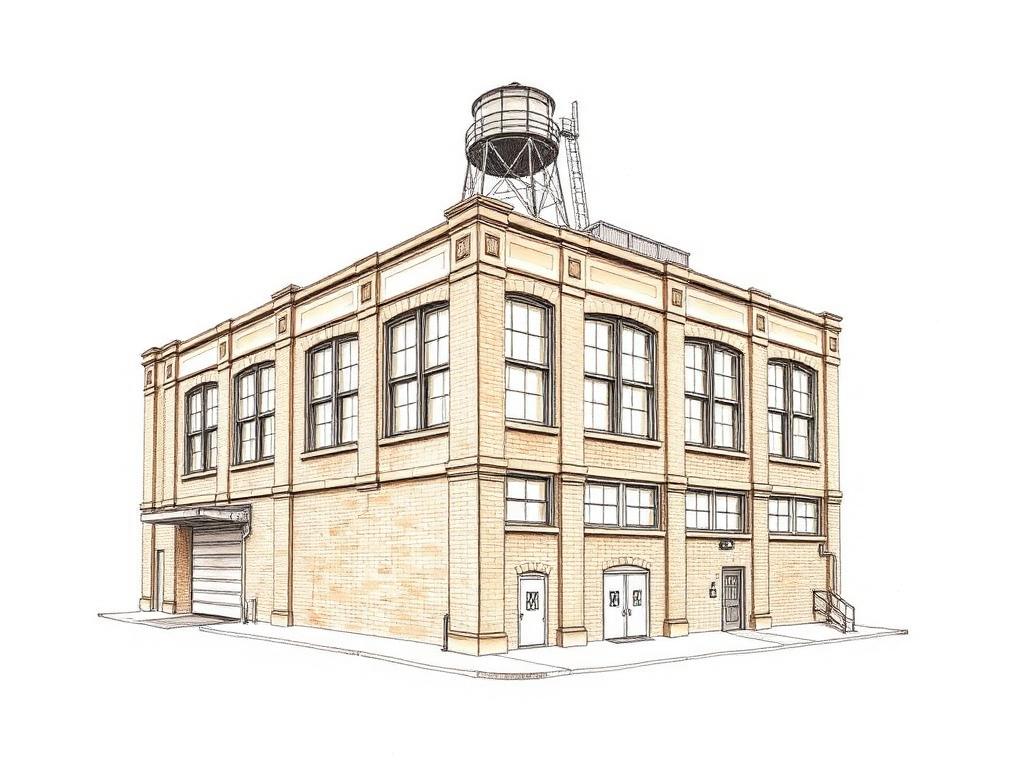
Bushwick's industrial edge continues straight into it — loading docks at grade, heavy floor loads and three-phase power inside the business zone. The place to look if your work is genuinely production.
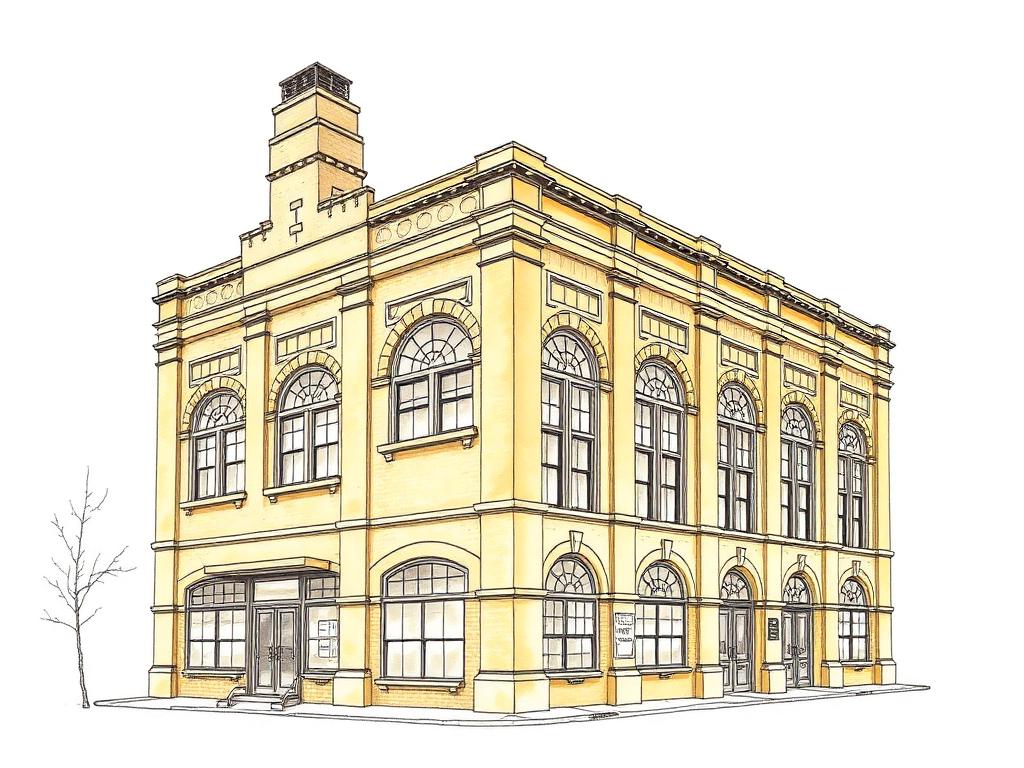
Over the Queens line, a few blocks past Myrtle–Wyckoff. Low-rise brick factory and knitting-mill stock much like Bushwick's, with more residential neighbors on the same block.
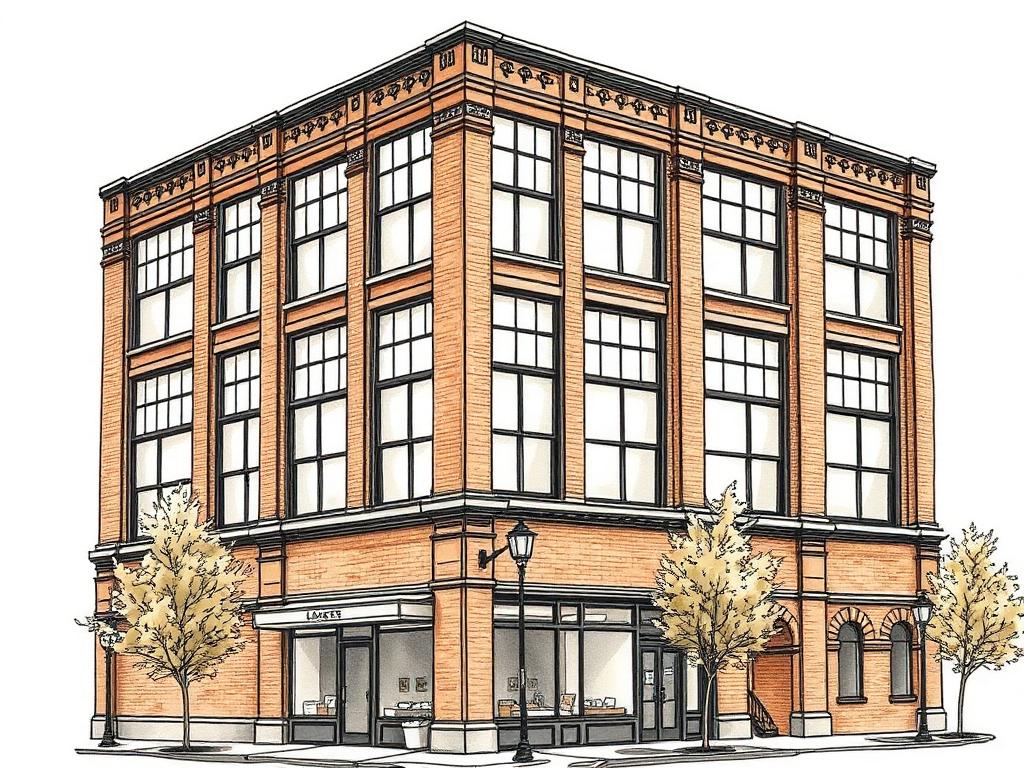
South and west along Broadway under the J and Z. Smaller loft and workshop floors above ground-floor retail, mixed into brownstone blocks rather than an industrial corridor.
What people ask before they take a Bushwick loft.
01What counts as a 'creative office loft' in Bushwick?
02How much does loft space in Bushwick cost?
03What's the smallest space I can rent in Bushwick?
04How is the transit?
05Can I do fabrication, food production or light manufacturing here?
06What's the story with the old brewery buildings?
07Can I run events, a venue, or a space open to the public?
08How is Bushwick different from Williamsburg and Greenpoint for offices?
09What buildings are the classic Bushwick loft buildings?
10Do you actually have off-market listings?
Got one we didn't cover? Put it in the brief above, or call 646-291-2018.
The words that decide what you're signing.
Every term that turns up on a tour, in a floor plan or in a lease — what it means, why it costs you, and how it behaves in this neighborhood specifically.
- Brewery masonry
Load-bearing brick construction built for brewing — unusually thick walls, deep vaulted cellars, irregular floor levels, and openings sized for tanks and barrels rather than for people.
Why it mattersThick walls mean fewer windows and harder retrofits. Irregular levels mean a floor plan that looks simple can involve steps, ramps and unusable corners.
In BushwickGerman brewers put as many as fourteen breweries into a fourteen-block stretch here, and that stock is still standing. It is the most characterful space in the borough and the most awkward to fit out. Walk it before you plan it — the drawings rarely capture the level changes.
- Mill loft
Brick manufacturing loft, roughly 1890 to 1930. Three to six stories, timber or early steel framing, steel-sash windows, usually one freight shaft.
Why it mattersThis is the workhorse stock. Plates commonly run three to twelve thousand square feet, and it is where nearly all demised small space lives.
In BushwickMost of what you will tour in Bushwick is this. It is also why a small shop can still take a whole floor here — the buildings subdivide well and the rents are the lowest in north Brooklyn.
- Column spacing
The clear distance between structural columns, sometimes called the bay.
Why it mattersIt decides whether a desk grid, a machine or a photo backdrop actually fits.
In BushwickMeasure it on the tour with a tape. In the brewery stock the spacing is genuinely irregular — bays were set around equipment that left decades ago, and no two floors necessarily match.
- Floor load
The weight a floor is rated to carry, in pounds per square foot. Live load is what you can put on it; dead load is the structure itself.
Why it mattersIt decides whether a plan works or gets stopped. Presses, kilns, dense filing and heavy inventory all need a number in writing.
In BushwickThe warehouse stock in the Evergreen corridor generally carries well. The brewery and mill buildings vary floor to floor, sometimes within one building, because they were altered repeatedly. Get the rating for your specific floor rather than the building.
- Clear-to-deck
The distance from the finished floor to the underside of the structure above — the true ceiling height, before ductwork, sprinklers or lighting.
Why it mattersBrokers quote the highest number in the room. Retrofitted duct and sprinkler runs can take two or three feet off the usable height.
In BushwickSprinkler retrofits are common here because so many buildings changed use, and they hang low. Ask where the lowest run sits, not just what the deck height is.
- Freight elevator
A goods lift, usually with manual gates, rated in pounds. In many older buildings it is run by a building employee rather than by tenants.
Why it mattersCapacity decides what you can move in. The operator's hours decide when.
In BushwickPlenty of Bushwick buildings have no freight at all, or one shared car for the whole building. For an artist moving canvases that is manageable; for anyone with equipment it is the question that decides the building.
- Three-phase power
An electrical service delivering power in three alternating currents rather than one. Required for most serious machinery, large compressors and industrial equipment.
Why it mattersAdding it is not a landlord favor — it is a utility timeline, and it can run months.
In BushwickCommon in the Evergreen corridor warehouse stock and much rarer in the converted mill buildings. If you are running a shop, start with the buildings that already have it rather than planning an upgrade.
- Electric: direct, submetered or included
Three different ways you pay for power. Direct means your own account with the utility. Submetered means the landlord reads a meter and bills you, often with an administrative uplift. Rent inclusion means it is built into the rent, usually with a consumption cap.
Why it mattersThe same space can produce three very different monthly bills, and rent-inclusion caps are frequently set below what a working studio actually uses.
In BushwickKilns, compressors and lighting rigs blow through inclusion caps fast. If you are running any of those, ask for direct metering or at least find out what the cap is in kilowatt-hours before you compare two rents.
- Certificate of occupancy
The city document stating what a building is legally permitted to be used for, floor by floor.
Why it mattersIt governs your use regardless of what the lease says or what the last tenant did. A landlord saying the previous tenant did it is not the same as the certificate allowing it.
In BushwickThis is the single most important document in a Bushwick deal. The neighborhood has more informal use than anywhere in Brooklyn, and the gap between what happens in a building and what the certificate permits is often wide. Read it before the letter of intent.
- Place of Assembly permit
A separate permit required when a space holds a gathering above a threshold occupancy — events, screenings, classes, performances, anything ticketed.
Why it mattersIt is a permitting question, not a lease question, and it is the thing that most often kills a plan after signing.
In BushwickThe classic Bushwick trap. Because the neighborhood hosts so many openings, shows and events, tenants assume it is routine. It isn't — the certificate of occupancy has to allow assembly, and the permit is separate on top of that. Confirm both before you sign, not after you have announced an opening.
- Sprinklers and fire suppression
The building's fire protection system, and whether it covers your floor to the standard your intended use requires.
Why it mattersAssembly use, woodworking, spray finishing and cooking each carry different requirements. Retrofitting a floor is expensive and slow, and it is usually the tenant paying.
In BushwickMany buildings here were sprinklered piecemeal as uses changed. Ask what the existing system covers, whether it is adequate for what you plan to do, and who pays if it isn't. This is the second-biggest budget surprise in Bushwick after electrical.
- Loft Law
Article 7-C of the state Multiple Dwelling Law, which grants protections to people who lived in commercial or manufacturing buildings before those buildings were legalised for residential use. Buildings covered are known as interim multiple dwellings.
Why it mattersIt is the reason some buildings cannot lease space commercially the way an owner might want to, and why parts of a building may be off limits or subject to a legalisation process that is still running.
In BushwickBushwick and the blocks around it have a long history of people living in manufacturing space, and the law was expanded to cover more of those buildings. If a building is in the process of legalising, ask what that means for your floor, your hours and your access — it can affect all three.
- Industrial Business Zone
A city-designated area where industrial use is protected and residential conversion is not permitted.
Why it mattersInside one, machinery, venting and truck access are expected rather than negotiated, and the land is not on a path to housing.
In BushwickBushwick's Evergreen corridor is its own designated zone. Inside it, production is the expected use and a long build-out is a safer bet. Outside it, you are in mixed blocks where neighbours and the certificate of occupancy decide what you can do.
- Letter of intent
A short document setting out the commercial terms — rent, term, free rent, improvement money — before lawyers draft a lease. Generally non-binding, except for any confidentiality or exclusivity clauses inside it.
Why it mattersTerms conceded in a letter of intent are very hard to claw back in the lease, and the parts that are binding are binding.
In BushwickUse it to pin down the use clause, not just the rent. In Bushwick the negotiation that matters is what you are permitted to do in the space, and that belongs in the letter rather than discovered in the lease draft.
- Good Guy Guarantee
A limited personal guarantee, near-universal in New York commercial leases. You personally guarantee the rent only until you vacate — provided you give the agreed notice, hand the space back broom-clean, and are current on rent. You are not personally liable for the balance of the term.
Why it mattersIt is the difference between walking away owing two months and walking away owing four years. It is also frequently misdescribed: some landlords present a full personal guarantee and call it a good guy. Read what the document actually says.
In BushwickExpect one on almost any deal here. Broom-clean matters more than usual in Bushwick — if you have built a mezzanine, a spray booth or heavy racking, agree in writing now whether removing it is your obligation at the end, because that cost can dwarf the notice period.
- Escalation
How the rent rises over the term. Usually a fixed annual percentage, but sometimes tied to the porter's wage — a union building-service wage rate — or to an inflation index.
Why it mattersA rent that looks flat is not. At three percent a year, the fifth year of a five-year deal is roughly thirteen percent above the first. Budget from the last year, not the first.
In BushwickFixed percentage is standard in the small family-held buildings here, usually two and a half to three percent. On a long build-out-heavy deal, a longer term at a fixed escalation is usually worth more than a lower starting rent.
- TI allowance and work letter
The improvement money a landlord contributes to a build-out, and the document defining who builds what, to what standard, and who pays for it.
Why it mattersAs-is and vanilla box mean very different things. Without a work letter you can find yourself paying for sprinklers, a bathroom or a demising wall you assumed came with the space.
In BushwickBushwick space is usually taken as-is, and the real negotiation is free rent rather than dollars. Given that sprinklers and electrical are the two things most likely to need work here, get both written into the work letter rather than assumed.
You know what to ask now. Tell us what you're after.
Seven questions, no account, nothing to download. A person reads every one — and comes back with floors that match, including the ones that never reach a listing site.
Written from buildings we've actually walked. If something here is wrong, or a term is missing, tell us — we'd rather fix it than have it repeated back to us on a tour.
Got a loft
building here?
We probably know a tenant for it. Quietly.
Let's talk→